
Policy & Legal Framework
Korea offshore wind law, permitting and auctions
KWI tracks every new offshore wind law, bill, auction guideline and ordinance from the central ministries, the Korea Energy Agency, the regional oceans-and-fisheries offices and local governments, in English with a link to the official Korean source.
Last updated Oct 7, 2026 Public
The legal foundation
Korean offshore wind rests on 6 statutes in force. The Offshore Wind Special Act sets how sites are chosen and who may develop them. The Electric Utility Act governs the Electricity Business Licence (EBL), grid connection and the wholesale market. The Act on the Promotion of the Development, Use and Diffusion of Renewable Energy carries the Renewable Portfolio Standard, the REC market and the fixed price auction. The Framework Act on Carbon Neutrality and Green Growth, the Energy Act and the Distributed Energy Activation Act set the wider frame.
Read more about the legal foundation ›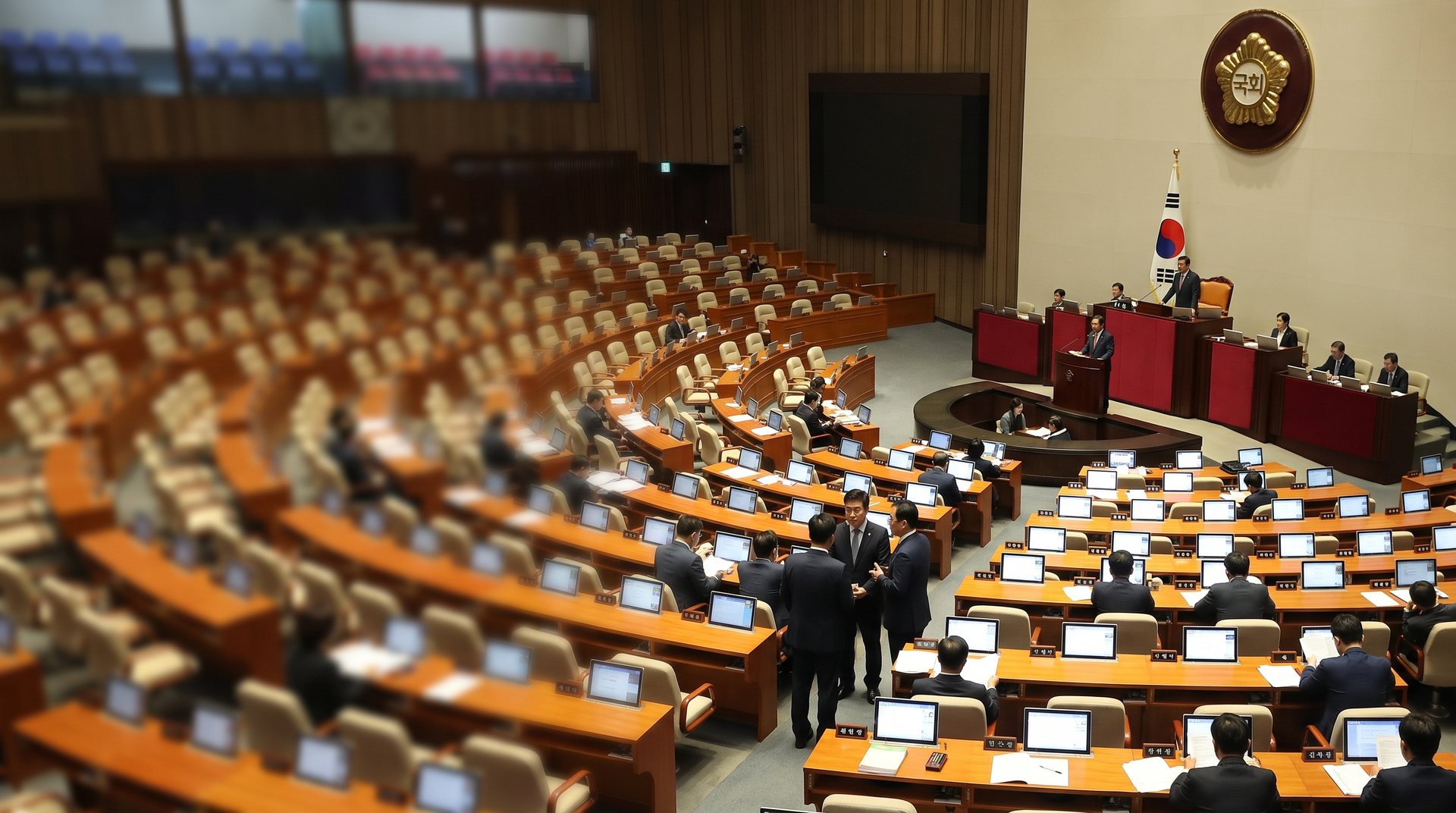
The Special Act and what it changed
In force since 26 March 2026 with its Enforcement Decree and Enforcement Rules, the Special Act moves Korea from developer led site acquisition to a government led planned siting regime.
Planned siting. The state designates preliminary zones and then development zones, and selects developers within them by competitive bidding. Three years from promulgation, new EBLs are barred outside those zones.
One stop approval. Once an implementation plan is approved, roughly 28 statutory authorizations are deemed granted, the EBL and public waters occupancy among them.
Governance and consent. An Offshore Wind Power Committee under the Prime Minister oversees the regime. Zone designation and benefit-sharing run through a public-private consultative body in which representatives of fishers and residents hold at least half the seats.
Read more about the Special Act ›
The permit pathway
Outside the one stop route, a project still clears authorizations one law at a time. This page sets out 16 of them across 7 stages, each under a different statute and ministry, so the sequence rather than any single permit decides how long development takes. Risk concentrates in the EBL, environmental assessment, and public waters use and navigation safety. The first offshore permit, public waters occupancy for a measurement mast, has averaged about 484 days against a 98 day statutory target.
Read more about the permit pathway ›
How projects are selected
A licence does not bring revenue. A project becomes bankable by winning the fixed price competitive auction run by the Korea Energy Agency, which carries a 20 year offtake, and certificates carry higher multipliers further offshore and in deeper water. Under the Special Act, competitive bidding within development zones now runs in parallel.
Read more about project selection and auctions ›
National plans and targets
The First Basic Plan for Renewable Energy (2026 to 2035), adopted on 19 May 2026, targets 100 GW of renewable capacity by 2030 against 37.1 GW today, and replaces the Renewable Portfolio Standard with a government led long term fixed price contract market from 2027. The mid to long term bidding roadmap published on 30 June 2026 commits 55 GW of offshore wind tenders over ten years, 4 GW or more each year. The outlook tabled for the 12th Basic Plan on Long term Electricity Supply and Demand puts offshore wind at 25 GW in 2035 and 45 GW in 2040. These are outlook figures tabled for public discussion, not an adopted plan, and they may change before the 12th Basic Plan is finalised.
Read more about national plans and targets ›What this page tracks
Ministry notices, bills before the National Assembly, Korea Energy Agency announcements, permit decisions and local ordinances are tracked together, because a project is affected by all of them at once. The page holds 112 items, every one linked to its official Korean source. 5 were added in the past 30 days.
Read more about what this page tracks ›